
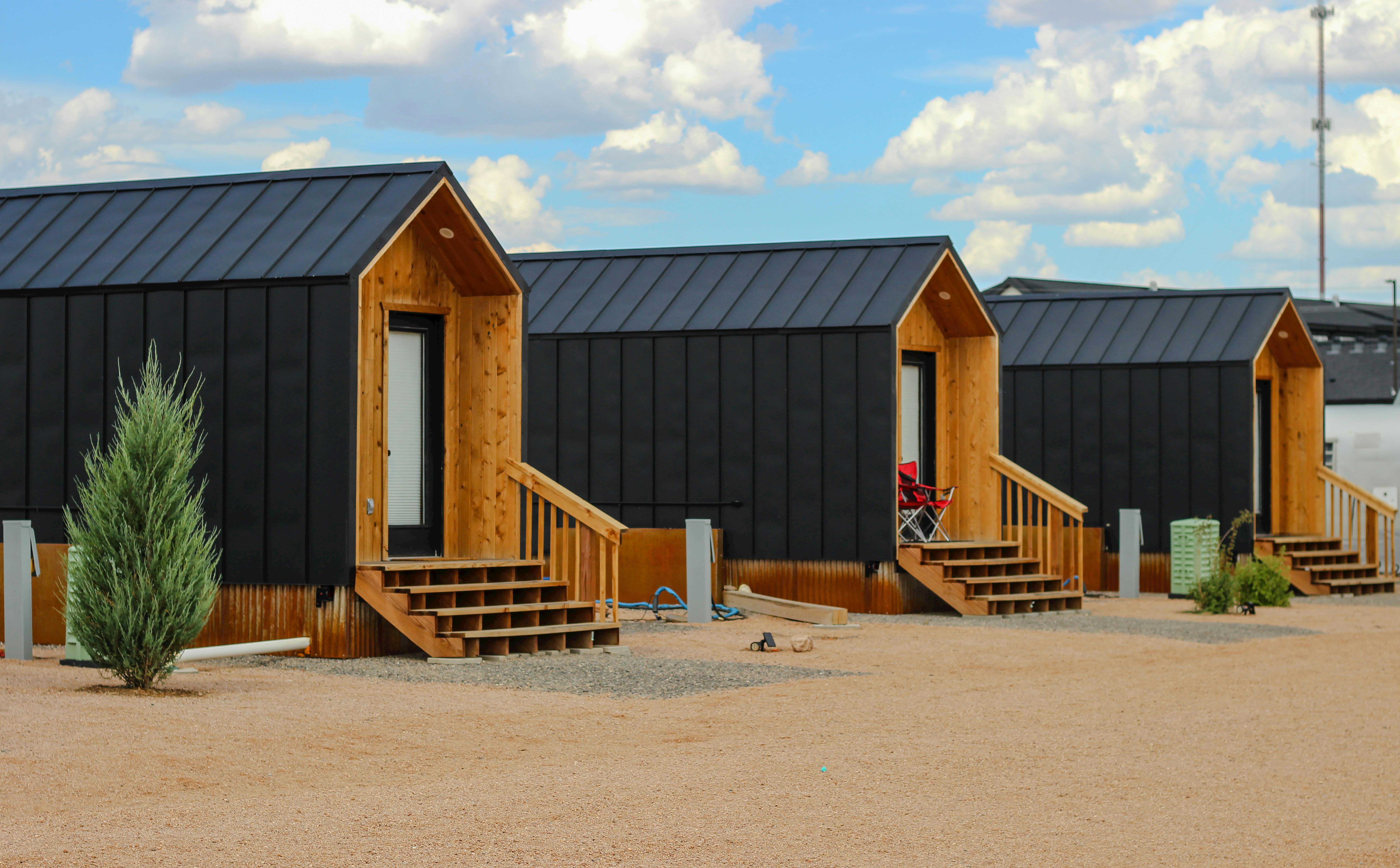
Have you ever heard of the saying: Everything’s bigger in Texas? Apparently, not anymore, as tiny homes are a big hit there right now! Tiny homes were once a niche choice, but are now a practical solution for buyers contending with rising prices, higher interest rates, and limited affordability.
Across the U.S., newly built homes have gradually been shrinking in size as builders respond to affordability pressures. That trend is even more pronounced in Texas, where the average square footage of new construction has fallen more sharply than the national average over the past several years. What was once seen as a compromise is now being embraced by buyers who value lower upfront costs, simplified living, and quicker entry into homeownership.
Texas Homes Are Getting Smaller By Design
National data shows that the median size of new homes has declined by more than 3% over the past five years. In Texas, the reduction has been even steeper. In 2020, newly built homes in the state averaged nearly 2,200 square feet. By 2025, that figure had dropped to just over 2,070 square feet, reflecting a meaningful shift in how developers are designing new housing.
Builders are responding to market conditions that have made traditional single-family homes less attainable for many buyers. Rising construction costs, labor shortages, and elevated borrowing rates have all contributed to higher price tags. Smaller homes allow builders to lower entry prices while still maintaining profitability.
Within this downsizing trend, tiny homes represent the most extreme, but also one of the fastest-moving, segments of the market.
San Antonio Emerges as a Tiny Home Hotspot
San Antonio has become a focal point for Texas’s tiny home movement. Several master-planned communities featuring compact homes have been developed on the city’s outskirts, offering residences that can be as small as 350 square feet. These homes are designed with efficiency in mind, often featuring open layouts, lofted sleeping areas, and minimal but functional storage.
Despite their modest size, demand has been strong. Local real estate professionals report that these homes often sell quickly, sometimes within weeks of hitting the market. While reactions online have been mixed, buyer activity suggests that there is a clear market for these properties.
The appeal lies less in square footage and more in accessibility. For many buyers, especially first-time homeowners, tiny homes offer a rare opportunity to purchase property at a price point that feels achievable in today’s market.
Affordability Sparks Debate, But Buyers Keep Coming
Tiny homes have sparked heated discussions about what affordability truly means. On a price-per-square-foot basis, these homes can appear expensive when compared to larger properties. In some cases, tiny homes in San Antonio have been priced well above the city’s median cost per square foot.
However, the total purchase price tells a different story. While a compact home may seem costly relative to its size, the overall price tag is often far lower than that of a traditional house. In a metro area where median home prices exceed $320,000, a six-figure tiny home can represent a significantly lower barrier to ownership.
Financing incentives also play a role. Builders frequently offer below-market mortgage rates, reduced down payments, and assistance with closing costs. These incentives can substantially lower monthly payments, making tiny homes particularly attractive to buyers who are priced out of larger properties.
Who Is Buying Tiny Homes in Texas?
The typical tiny home buyer in Texas is often a single adult, though the demographic is broader than many might expect. College students, young professionals, retirees looking to downsize, and remote workers seeking lower living costs have all shown interest in these compact residences.
Investors are also a major force behind the demand. Many buyers see tiny homes as income-generating properties, especially in areas with strong rental demand. Monthly rents can be high relative to purchase price, allowing owners to cover mortgage payments and generate cash flow.
Out-of-state investors, particularly from high-cost markets like California, have shown significant interest. Texas’s comparatively affordable housing market continues to attract buyers from states where homeownership has become increasingly out of reach. Migration trends over the past decade show a steady influx of Californians relocating to Texas, driven largely by housing affordability and lower taxes.
Faster Sales Reflect Market Efficiency
One of the most notable characteristics of the tiny home market is how quickly properties move. Real estate professionals report that tiny homes often sell faster than standard-sized houses, even during periods of broader market slowdown.
Lower price points expand the pool of eligible buyers, while simplified layouts appeal to those seeking low-maintenance living. For sellers and builders, this speed reduces carrying costs and limits exposure to shifting market conditions.
The rapid pace of sales suggests that tiny homes are not merely a novelty but a functional response to real-world housing challenges.
Design Trade-Offs Shape Buyer Expectations
Living in a tiny home requires compromise. Storage is limited, layouts can be unconventional, and privacy is reduced. Features like lofted sleeping areas accessed by ladders or compact kitchens without full-sized appliances are common.
These design choices can be polarizing, but buyers who enter the market tend to do so with clear expectations. Many view tiny homes as transitional housing, a way to build equity, reduce living expenses, or gain a foothold in real estate ownership before moving on to larger properties.
For others, especially older buyers or minimalists, the simplicity itself is the selling point.

A Growing Role in Texas’s Housing Future
Tiny homes are unlikely to replace traditional housing in Texas, but they are carving out a meaningful niche. As affordability remains a central challenge across the state, smaller homes offer one of the few paths to ownership for buyers who might otherwise remain renters.
Builders continue to experiment with designs, community layouts, and pricing models, suggesting that the segment will keep evolving. Local governments are also paying closer attention, as zoning and infrastructure considerations play a key role in determining where tiny home developments can succeed.
A huge demand exists, and it’s only growing; that much is clear about tiny homes. In a state known for big living, we’re seeing that smaller spaces can still make a big impact on the real estate market.